
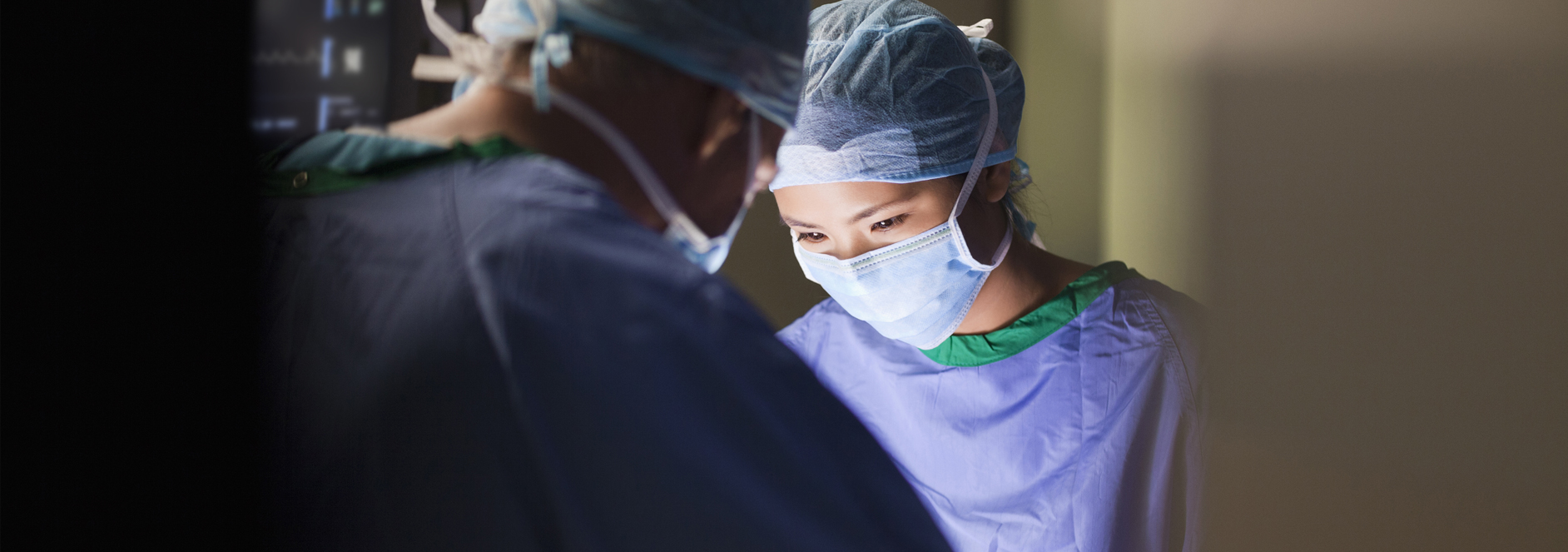
What is Mohs Micrographic Surgery?
Mohs surgery is a state-of-the art treatment for skin cancer that relies on precision and accuracy of a microscope to trace and ensure removal of skin cancer down to its roots.
The goal of this surgical procedure is to totally remove the skin cancer while minimizing the amount of uninvolved, normal surrounding skin removed in the process.
For decades, Mohs micrographic surgery has proven effective in getting out the roots of skin cancer by combining the surgical removal of cancer with the immediate microscopic examination of the tumor and underlying diseased tissue. This process allows Dr. Kolansky and other surgeons to see beyond the visible disease and precisely identify and remove the entire tumor.
How Does Mohs Surgery Work?
Mohs micrographic surgery is performed in stages, all in one visit, while the patient waits between each of the stages. After removing each layer of tissue, Dr. Kolansky examines it under a microscope in an on-site lab to see if any cancer cells remain, until no cancer is left. This careful process ensures that as much safe tissue is left in tact.
The procedure goes as follows:
- After obtaining local anesthesia, the visible portion of the tumor is removed
- A thin “pancake like” layer of tissue is removed from the tumor site
- A map or drawing is made of the removed tissue as a guide of the precise location of any remaining cancer cells
- The removed tissue is sectioned, thinly sliced, and then mounted on microscope slides for examination
- The entire bottom surface and outside edges of the tissue section are thoroughly examined under the microscope to check for evidence of remaining cancer cells
- If more tumor is found, its location is traced on the map so that only areas with remaining skin cancer undergo further surgery
If any of the sections contain cancer cells, Dr. Kolansky:
- Uses the map to return to the specific area of the tumor site where skin cancer is still present
- Removes another thin layer of tissue only from the specific area within each section where cancer cells were detected
- Microscopically examines the newly removed tissue for additional cancer cells
This process continues, layer-by-layer, until the cancer is completely removed. This aids in preserving healthy, normal tissue and ensures that all the diseased tissue – and only the diseased tissue – is removed.
Leaving as much normal, uninvolved skin as possible is important throughout your body, but is especially important when the skin cancer involves the eyelid, lip, nose, ear, or face.
Which Types of Skin Cancer is Right for Mohs?
Mohs micrographic surgery is most commonly used to treat basal and squamous cell carcinomas. The surgery is the treatment choice when:
- The cancer is large
- The edges of the cancer cannot be clearly defined
- The cancer is in an area of the body where it is important to preserve healthy tissue for the maximum functional and cosmetic result, or is likely to recur if treated by methods other than Mohs
- If the skin cancer involves the central face, eyelids, nose, ears, lips, cheeks, and neck
- Recurrent skin cancer or prior treatments failed
- The cancer has an aggressive appearance under the microscope
- The cancer is a known aggressive cancer such as:
- Sebaceous carcinoma
- Dermatofibrosarcoma protuberans (DFSP)
- Extramammary Paget’s Disease
- Atypical fibroxanthoma (AFX)
- The patient has a deficient immune system, such as kidney or heart transplant patients
- Patients are concerned about obtaining the best cosmetic outcome

Important Facts About Mohs Micrographic Surgery
Of all the available treatments of skin cancer, Mohs:
- Offers the highest cure rate (99%)
- Has the lowest chance of cancer re-growth
- Examines all of the surgical margins
- Spares the most normal skin
- Minimizes the potential for scarring and disfigurement
- Is the most exact and precise means of cancer removal
- Cost effective, outpatient surgery with local anesthesia
Why Choose Dr. Kolansky for Your Mohs Surgery?
Fellowship-trained Mohs surgeons are members of the American College of Mohs Surgeons (ACMS), which is connected to the Mohs College. This membership organization of trained skin cancer and reconstructive surgeons specialize in Mohs micrographic surgical technique.
Dr. Glenn Kolansky is a fellow of the American College of Mohs micrographic surgery and Cutaneous Oncology and has over 22 years of experience performing Mohs surgery, tissue processing, and reconstruction.
During these years of practice, Dr. Kolansky performs 800 – 1000 Mohs procedures each year. Learn more about Dr. Kolansky, his education, and his training to discover why he’s been awarded a New Jersey Top Doctor award for more than ten years.
Contact us today or click below to schedule your appointment.